On this page
- On the SF 5291 EnergySaver moves the freezer from -18 °C to -16 °C (about 0 °F to 3 °F). 1
- On the URh 375i it moves the fridge from 4 °C to 7 °C (39 °F to 45 °F). 2
- Keep ventilation openings clear, avoid sun and heat sources and shorten door openings. 123
- The lower the temperature you choose, the more energy the appliance uses. 123
What does EnergySaver do?#
It switches the appliance to an energy saving mode in which consumption drops and the temperature inside rises. Liebherr states the trade plainly: food remains fresh, but shelf life is reduced. The function is a menu item you can turn on and off. 12
The manuals print the exact values. On the SF 5291 freezer the recommended -18 °C (about 0 °F) becomes -16 °C (3 °F) while EnergySaver is active. On the URh 375i refrigerator, the recommended 4 °C (39 °F) becomes 7 °C (45 °F). 12
| Appliance | Recommended setting | With EnergySaver active |
|---|---|---|
| SF 5291 freezer section | -18 °C (about 0 °F) | -16 °C (3 °F) |
| URh 375i fridge section | 4 °C (39 °F) | 7 °C (45 °F) |
Those are the two models we read in full. Check the EnergySaver page of your own manual for its values, because other Liebherr models may differ.
How do I turn it on and off?#
From the menu, using the key sequence in the manual's illustration. Both the SF 5291 and the URh 375i show one picture to activate and one to deactivate, and the text says only to follow the illustration. 12
- 1
- 2
- 3
Wait for the reading to move#
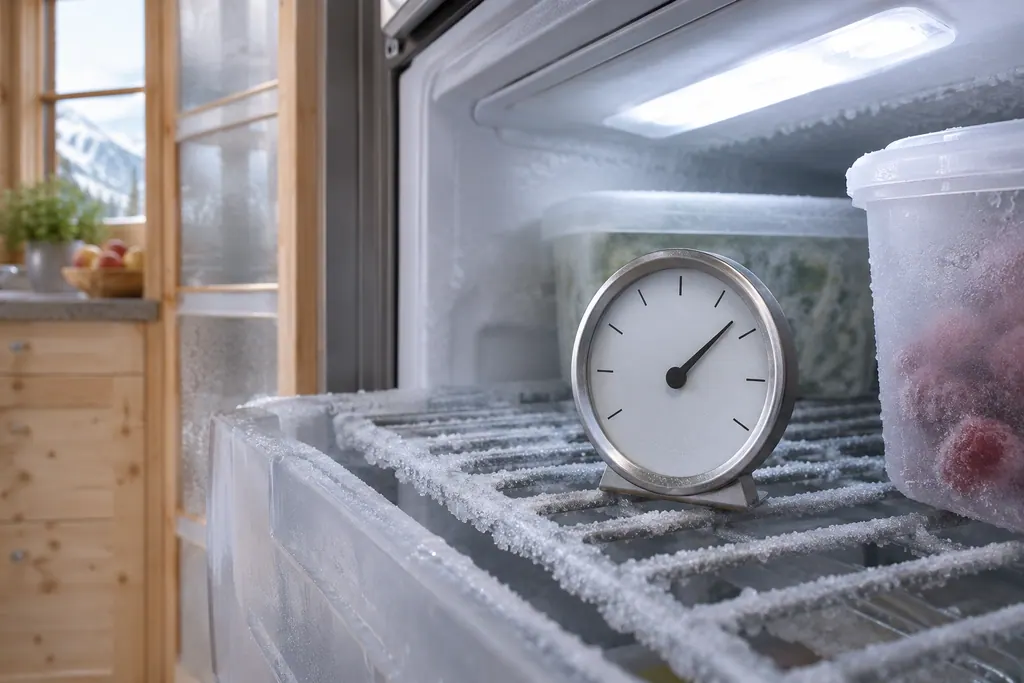
The interior drifts to the new value, so the number on the display will change slowly. Do not judge it in the first minutes.
- 4
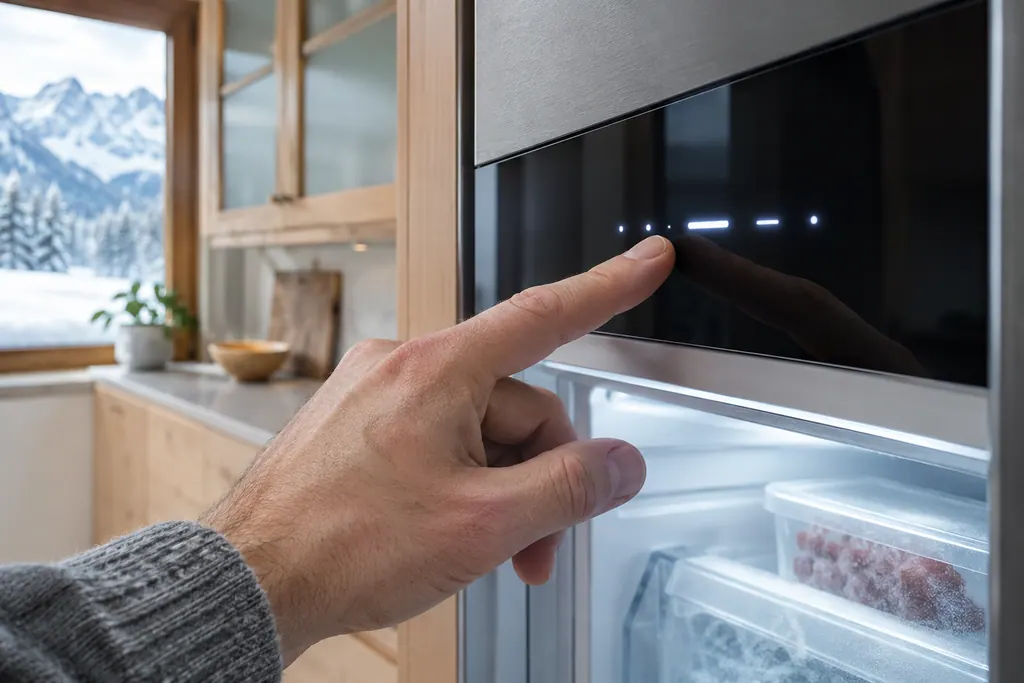
Do not combine it carelessly with a function that wants extra cold. SuperFrost, for example, exists to lower the freezer temperature so fresh food freezes through. 1 The two aims pull in opposite directions, so deactivate EnergySaver before a large batch. Our guide to SuperFrost timing has the numbers.
Which habits cost the most energy?#
Blocked ventilation, heat nearby, long door openings and warm food. These are the first points in the energy-saving chapter of all three manuals, and they hold whatever the function setting is. 123
The list for the SF 5291 is practical:
- Keep clear of obstruction all ventilation openings in the appliance enclosure or in the structure for building-in, and never block the air slits of the fan. 1
- Do not set the appliance in direct sunlight or next to a heating unit. 1
- A position directly beside an oven can raise energy consumption slightly, depending on the oven's age and use. 1
- A warmer room increases consumption, and energy use depends on installation conditions such as the ambient temperature. 1
- Avoid opening the door for longer than needed. 1
- Wrap and cover all food, which prevents frost buildup. 1
- Let warm food cool to room temperature before inserting it. 1
The URh 375i manual adds two points: take food out only for as long as necessary so it does not warm up, and use HolidayMode for longer periods of absence. 2
What temperature should I keep for the best balance?#
The recommended settings from the manuals are the baseline: -18 °C (about 0 °F) for the freezer section and 4 °C (39 °F) for the fridge section. The factory setting for the fridge on the URh 375i is 5 °C (41 °F). 12
The manuals also explain why a number on the display moves. The temperature depends on how often and how long the door is opened, on the room temperature at the installation site, and on the type, temperature and amount of food. 123 If you open the freezer often in summer, the reading follows the habits, not a defect.
Going colder than recommended uses more power. All three manuals say it directly: the lower the temperature is set, the higher the energy consumption. 123 Choose the recommended value unless you have a reason to go lower.
The ambient rating matters as well. The rating plate carries a climate class, and the manual lists the room temperature range each class is built for: SN from 10 °C to 32 °C (50 °F to 90 °F), N from 16 °C to 32 °C (61 °F to 90 °F), ST from 16 °C to 38 °C (61 °F to 100 °F), and T from 16 °C to 43 °C (61 °F to 109 °F). 1 The manual asks you to keep to those ambient temperatures to guarantee trouble-free operation. 1
What should I do about the dust on a wine cabinet?#
Remove it once a year. The W5250 manual says dust deposits increase energy consumption, and that the dust should be removed from the refrigerating machine and the heat exchanger metal grid at the back of the appliance once a year. 3
Unplug the cabinet before you reach behind it. The cleaning notes in the same manual start with the power plug for the same reason. For the other filters on cabinets and refrigerators, the FreshAir filter guide lists the intervals, and the ventilation grille entry shows the grille on units that have one.
Under-worktop and built-in models need an unobstructed grille too. The URh 375i troubleshooting table lists insufficient ventilation as a cause of a refrigerator that is not cold enough, and the remedy is to clear and clean the ventilation grille. 2
Which functions push energy use up?#
Every boost function does. For SuperFrost, MaxIce, PartyMode and SuperCool, the manuals repeat one sentence: while the function is active, the appliance operates at a higher output, so noise may be temporarily louder and energy consumption increases. 12
Each one ends by itself, which keeps the cost bounded if you forget it. The times below are the ones printed for the SF 5291 and the URh 375i. 12
| Function | Appliance | Ends by itself after |
|---|---|---|
| SuperFrost | SF 5291 freezer | 56 to 72 hours, depending on the food volume |
| MaxIce | SF 5291 freezer | 48 hours |
| PartyMode | SF 5291 freezer and URh 375i fridge | 24 hours |
| SuperCool | URh 375i fridge | 18 hours |
PartyMode is the one to watch, because it bundles other functions: SuperFrost and MaxIce on the freezer, SuperCool on the fridge. Deactivating PartyMode discards the changes it made. 12 Our IceMaker guide covers MaxIce, and the refrigerator SuperCool guide covers the fridge side.
Loading affects the bill too. The storage rules for each model say to leave space between goods so the air can circulate, and to keep the fan vents free. 12 An overfilled drawer works against the fan.
What if the numbers do not behave?#
If the reading is warmer than the EnergySaver value after a day of closed doors, treat it as a cooling question rather than a saving mode. The manuals' not-cold-enough tables point to the door, the room, the setting and heat sources first. 12
Specifically: the door must close properly, the ambient temperature must fit the climate class, the temperature must be set to a colder value and checked after 24 hours, and the appliance must not stand near a stove or heater. 12 Our pages for a freezer that is not cold enough and a refrigerator that is not cold enough go through them.
Warm exterior surfaces on a freezer are normal too: the SF 5291 says the heat of the refrigerant circuit is used to prevent condensate forming. 1
Our independent repair company is separate from Liebherr, and a unit within Liebherr's own warranty is repaired through Liebherr. For other units, book a visit through the refrigerator repair page or the freezer repair page. The technician agrees the price with you before any work starts. The exact cost is confirmed after the on-site diagnostic.
Sources#
- User GuideLiebherr-Hausgeräte (US market edition; linked from https://www.liebherr.com/en-us/p/sfnsth-529i-3033451) · PDF created 10.11.2025; file tag SFNsth529i_237; cover: SF 5291; US product page SFNsth 529i · PDF pages 6, 10, 15, 16, 32
- User GuideLiebherr-Hausgeräte (US market edition; linked from https://www.liebherr.com/en-us/p/urh-375i-3033413) · PDF created 07.09.2026; file tag URh375i_137; US product pages URh 365i, URh 375i · PDF pages 9, 13, 14, 25, 26
- User GuideLiebherr-Hausgeräte (US market edition; linked from https://www.liebherr.com/en-us/p/wpsd-5252-3033484) · PDF created 07.07.2025; file tag WPsd5252_137; cover: W5250 (freestanding wine cabinet); US product page WPsd 5252 · PDF pages 5, 9